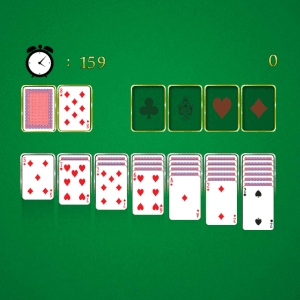
To play Solitaire (Classic Klondike), build all 52 cards into four foundation piles from Ace to King by suit.
Arrange the tableau in descending order with alternating colors, flip hidden cards as you clear them, and draw from the stock to the waste when you need new moves.
Make obvious moves first, focus on flipping hidden cards while building down in alternating colors, draw from the stock only when stuck, and take a quick Iron Snout break if you start rushing.
Want a simple step-by-step guide for How to play Solitaire and win more consistently? Read the full article below.
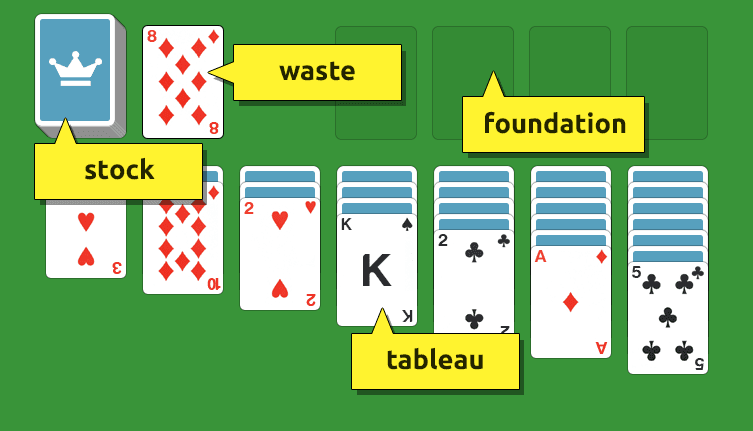
To play Solitaire (Classic Klondike), your goal is to move all 52 cards into four Foundation piles, building by suit from Ace to King. You do this by arranging cards in the Tableau (the seven columns on the main board), revealing face-down cards, and drawing from the Stock when you run out of moves.
Solitaire begins with a tableau of seven columns:
Column 1 has 1 card (face up)
Column 2 has 2 cards (top card face up, the rest face down)
Column 3 has 3 cards (top card face up)
…
All remaining cards form the stock (the draw pile). A separate area is reserved for the waste (the face-up cards drawn from the stock) and the four foundation piles.
In the tableau, you build cards in descending order, alternating colors:
Example: Black 10 → Red 9 → Black 8 → Red 7
You can move a single face-up card or a properly ordered stack.
Foundations are built by suit, ascending from Ace:
Ace of Hearts → 2 of Hearts → 3 of Hearts … → King of Hearts
Repeat for Clubs, Diamonds, Spades.
Whenever you remove the top face-up card from a tableau column and expose a face-down card, you flip it face up. This is a major part of progress.
If you clear a tableau column, only a King (or a stack starting with a King) can be moved into that empty space. Empty columns are powerful because they let you reorganize large stacks.
When you cannot make a tableau move (or you choose not to), draw from the stock to the waste:
Draw 1: flip one card to the waste
Draw 3: flip three cards (only the top waste card is playable)
In many digital versions, you can cycle through the stock again after it runs out. Some versions limit the number of passes.
Look for Aces to start foundations and for tableau moves that reveal face-down cards.
Move cards in the tableau to create longer descending stacks and open up hidden cards.
Your main early goal is to reveal face-down cards.
Any move that flips a new card is usually more valuable than a move that simply rearranges visible cards.
Draw when you are stuck, but do not mindlessly cycle. Check whether placing a new card will block a useful build or whether it enables a flip.
Putting cards into foundations feels like progress, but it can reduce flexibility.
If a card is still useful for building tableau stacks (especially mid-rank cards), you may want to keep it in play for a while.
Once you create an empty column, use it to park a King-led stack and rearrange your tableau to reveal more face-down cards.
Columns with more face-down cards are “high value.” Try to work on them early to unlock more options.
A common beginner mistake is moving every possible card to foundations immediately. Sometimes you need a 6♣ in the tableau to build a sequence, even if it could go to the foundation.
An empty column is not just space; it is a way to restructure the entire board. Aim to create one, then use it to move stacks around and expose hidden cards.
If your tableau becomes heavy in one color blocking the other, you will stall. When you have a choice between two similar moves, pick the one that keeps color alternation options open.
You cannot access every waste card instantly. Try to play the top waste card whenever it helps you reach the next ones, and avoid moves that trap a key card behind an unplayable sequence.
Solitaire rewards calm planning, but long sessions can lead to autopilot moves that cost wins. If you feel frustrated or start making rushed decisions, take a short reset.
Iron Snout is a good break option because it is fast, simple, and reaction-based, which clears your head without pulling you into a long strategy loop.
Play Iron Snout for a few minutes, then return to Solitaire and re-check your tableau with fresh eyes before committing to the next big move.
To move all 52 cards into four foundation piles, one per suit, from Ace to King.
Yes, if the stack is in descending order with alternating colors, and you move it onto the next higher card of the opposite color.
Only a King or a stack starting with a King.
Yes. Draw 1 gives you more control and typically improves win rates compared to Draw 3.
Move Aces and low cards early, but keep mid-rank cards in the tableau if they help you reveal hidden cards or build longer sequences.
Most stalls happen when you cannot reveal face-down cards or when moving too many cards to foundations removes tableau flexibility. Focus on flips and use empty columns strategically.
To answer how to play Solitaire, your goal in Classic Klondike is to move all 52 cards into four Foundation piles, building each suit from Ace to King.
You do this by arranging cards in the Tableau (the seven columns), following the rule of descending order with alternating colors.
When you cannot make a tableau move, draw from the Stock to the Waste to create new options and keep progressing.